
The Hunger Games: Mockingjay PDF ー A Comprehensive Guide (Updated 04/15/2026)
Today, April 15th, 2026, readers seeking the final installment can find “Mockingjay” in PDF format through various online sources, including PDF-Drive and OverDrive.
What is “Mockingjay”?
“Mockingjay”, penned by Suzanne Collins, represents the thrilling and emotionally charged culmination of The Hunger Games trilogy. Released following the monumental success of its predecessors, it plunges readers back into the dystopian world of Panem, but with a dramatically altered landscape. Unlike the previous books focused on survival within the arena, “Mockingjay” centers on a full-scale rebellion against the oppressive Capitol.
Katniss Everdeen, now a reluctant symbol of this uprising – the “Mockingjay” herself – finds herself navigating a complex web of political maneuvering, propaganda, and devastating loss. The narrative shifts from a personal fight for survival to a broader struggle for freedom and justice. The story explores the brutal realities of war, the ethical dilemmas of resistance, and the psychological toll exacted on those caught in the crossfire.
The “Mockingjay” PDF: Availability and Sources

Finding a PDF version of Suzanne Collins’ “Mockingjay” requires navigating a landscape of both legitimate and potentially questionable sources. Several platforms currently offer access, each with varying degrees of legality and reliability. PDF-Drive is frequently cited as a source for free PDF downloads, claiming no payment or registration is needed to access the file.
The Internet Archive also provides access, notably featuring a Vietnamese Edition. It’s important to verify the source’s legitimacy and respect copyright laws when downloading any PDF. Availability can fluctuate, so checking multiple sources is advisable. Remember to prioritize legal and ethical access methods whenever possible.
Free PDF Downloads: PDF-Drive and Similar Platforms
Numerous websites advertise free PDF downloads of “Mockingjay”, with PDF-Drive being prominently mentioned as a direct source for Suzanne Collins’ novel. These platforms typically operate by aggregating content from various sources, often without explicit copyright permission. While appealing due to their accessibility, users must be aware of the inherent risks associated with such downloads.
PDF-Drive specifically states it doesn’t require payment, subscriptions, or registration, making it seemingly convenient. However, downloading from these sites can expose users to potential malware, viruses, or compromised file integrity. Furthermore, accessing copyrighted material without authorization is illegal and unethical.
Other similar platforms exist, but their reliability and safety are often questionable. It’s crucial to exercise extreme caution, utilize updated antivirus software, and understand the legal ramifications before downloading any PDF from unofficial sources. Prioritizing legitimate avenues, like libraries or authorized eBook retailers, remains the safest and most ethical approach.
OverDrive and Library Access to the eBook
OverDrive presents a legal and convenient method to access “Mockingjay” in eBook format. This platform partners with public libraries and schools, allowing patrons to borrow digital books—including Suzanne Collins’ final Hunger Games installment—for free, using a valid library card. The service supports various devices, including e-readers, tablets, and smartphones, through its dedicated app or website.
Accessing “Mockingjay” via OverDrive eliminates the risks associated with unauthorized downloads, such as malware or copyright infringement. The availability of the eBook depends on your local library’s collection; however, many libraries offer a substantial digital catalog.
OverDrive also provides options for placing holds on popular titles, ensuring access when the eBook becomes available. Beyond books, the platform offers audiobooks and even movies, creating a comprehensive digital library experience. This represents a secure, ethical, and cost-effective way to enjoy “Mockingjay”.
This platform is particularly useful for educational purposes or for those who prefer a more tactile reading experience than a standard PDF. It’s a creative way to distribute and consume “Mockingjay,” offering an alternative to traditional eBook formats. Users can even create their own flip PDFs from existing files.
Vietnamese Edition Availability on Internet Archive
The Internet Archive provides access to a Vietnamese Edition of “Mockingjay (the Hunger Games, Book 3)”, broadening the reach of Suzanne Collins’s compelling narrative to a wider, international audience. This availability demonstrates the global impact and enduring popularity of the Hunger Games trilogy.

Through the Internet Archive, users can download, borrow, and stream this translated version of the novel, offering a valuable resource for Vietnamese speakers or those interested in exploring the story in a different language. The platform’s commitment to preserving and providing access to cultural and historical materials is evident in its inclusion of this edition.
Currently, the Internet Archive is actively seeking support to restore access to approximately 500,000 books, highlighting the ongoing need for funding to maintain this vital digital library. Accessing the Vietnamese “Mockingjay” contributes to the preservation of literature and promotes cross-cultural understanding.
Understanding the “Hunger Games” Trilogy Context
To fully appreciate “Mockingjay”, the culmination of Suzanne Collins’s dystopian masterpiece, understanding the broader context of the Hunger Games trilogy is crucial. The series initially introduces Panem, a nation built on the ruins of North America, and the brutal annual event known as the Hunger Games – a televised fight to the death amongst children as punishment for a past rebellion.
The first novel establishes Katniss Everdeen as a symbol of defiance, inadvertently sparking unrest within the districts. “Catching Fire” escalates the conflict, showcasing the Capitol’s oppressive control and the growing rebellion. “Mockingjay” then plunges readers into the heart of a full-scale war, where Katniss becomes the reluctant symbol – the Mockingjay – of the revolution.

Accessing a PDF version of “Mockingjay” allows for convenient revisiting of the entire narrative arc, enabling readers to trace the evolution of themes like oppression, survival, and the cost of war, enriching their understanding of this impactful series.

Katniss Everdeen’s Role in “Mockingjay”
In “Mockingjay,” Katniss Everdeen transitions from a survivalist in the arena to the unwilling symbol of a burgeoning rebellion against the Capitol. Initially, she’s a pawn, manipulated by District 13 to become the Mockingjay – a figurehead to inspire hope and unite the districts.
Her role is complex and fraught with moral ambiguity. While she desires to protect her loved ones, particularly Peeta, she grapples with the political machinations and the devastating consequences of war. The Capitol views her as a dangerous instigator, seeking retribution for her defiance in previous Games.
A PDF copy of the novel allows for close examination of Katniss’s internal struggles, her evolving understanding of power, and her ultimate agency in shaping the fate of Panem. Readers can analyze her actions and motivations, appreciating the depth of her character within the context of the revolution.

The Capitol’s Response to the Rebellion
The Capitol’s reaction to the escalating rebellion in “Mockingjay” is one of ruthless suppression and escalating brutality. Viewing Katniss Everdeen as the primary catalyst, President Snow orchestrates a campaign to discredit and eliminate her, alongside anyone perceived as sympathetic to the uprising.

This response manifests in intensified propaganda, targeted assassinations, and the deliberate destruction of districts demonstrating dissent; The Capitol employs advanced technology and military force to maintain control, showcasing its overwhelming power. A PDF version of the book allows readers to meticulously trace the Capitol’s strategies.
Analyzing the text reveals a chilling portrayal of totalitarian control and the lengths to which a regime will go to preserve its authority. The Capitol’s actions, detailed within the PDF, highlight the devastating human cost of oppression and the desperate measures taken by those fighting for freedom.
Key Themes Explored in “Mockingjay”
“Mockingjay” delves into profoundly complex themes, notably the devastating consequences of war, the manipulation of media, and the ethical ambiguities of rebellion. The PDF format allows for close examination of Suzanne Collins’ nuanced exploration of these ideas;
The novel critically examines the cost of freedom, questioning whether violent revolution is ever truly justified, even against oppressive regimes. Propaganda and its power to shape public perception are central, mirroring real-world concerns. Readers can easily highlight passages within the PDF illustrating these points.
Furthermore, the book grapples with the psychological toll of trauma and the difficulty of rebuilding a society shattered by conflict. The PDF version facilitates detailed analysis of character motivations and the moral compromises made during wartime. It’s a powerful study of power, control, and the enduring human spirit.
The Symbolism of the Mockingjay
The Mockingjay itself serves as a potent symbol throughout the series, and its significance is powerfully conveyed even within a PDF version of the text. Initially an unintended consequence of the Capitol’s genetic manipulation, the bird represents rebellion and defiance against oppression.
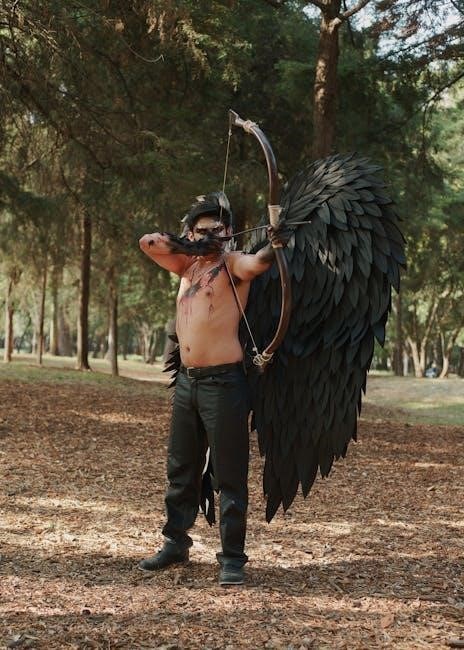
Unlike planned creatures, the Mockingjay’s ability to mimic songs embodies the districts’ resistance – echoing the Capitol’s own propaganda back at them. The PDF format allows readers to trace the evolution of this symbolism, from a simple bird to a beacon of hope for the revolution;
Katniss’s adoption of the Mockingjay as her emblem solidifies its meaning, transforming her into a figurehead for the uprising. Analyzing the text within a PDF allows for focused study of how Collins uses imagery and repetition to reinforce this central motif, highlighting the power of unintended consequences and the enduring spirit of freedom.
Character Development in the Final Installment
Within the “Mockingjay” PDF, readers witness profound character development, particularly in Katniss Everdeen. She grapples with the trauma of the Games and the weight of becoming a symbol of rebellion, a journey vividly detailed in the text. The PDF format facilitates close reading of her internal struggles and moral compromises.
Peeta Mellark’s arc is equally compelling, battling Capitol conditioning and reclaiming his identity. The PDF allows for comparative analysis of his pre- and post-capture states, highlighting the psychological toll of war. Gale Hawthorne’s character also undergoes significant change, revealing a darker side and challenging Katniss’s perceptions.
Accessing the story via PDF enables focused examination of dialogue and internal monologues, revealing nuanced shifts in character motivations and relationships. Collins masterfully portrays the complexities of individuals caught in a brutal conflict, and the PDF format enhances the ability to dissect these intricate portrayals.
Plot Summary: Major Events in “Mockingjay”
The “Mockingjay” PDF details the story’s continuation following Katniss’s rescue from the arena. District 13, previously thought destroyed, emerges as the center of the rebellion against the Capitol, with Katniss reluctantly becoming their “Mockingjay” – a symbol of hope. The PDF allows readers to meticulously follow the strategic planning and propaganda campaigns orchestrated by the rebels.
Key events unfold as Katniss participates in carefully staged “propos” – filmed messages intended to inspire uprisings in other districts. The PDF format enables detailed analysis of these scenes and their impact on the narrative. A rescue mission to save Peeta and other captured victors forms a crucial turning point, fraught with danger and moral ambiguity.

The climax involves a full-scale assault on the Capitol, culminating in a shocking revelation about President Snow’s manipulations and a tragic loss that reshapes Katniss’s future. The PDF provides a complete record of these pivotal moments, allowing for repeated readings and deeper understanding of the story’s complexities.
Critical Reception and Analysis of “Mockingjay”
The “Mockingjay” PDF facilitates in-depth study of the novel’s complex reception. Critics initially offered mixed reviews, praising Suzanne Collins’s unflinching portrayal of war’s psychological toll but questioning the darker tone and ambiguous ending. Many analyses, readily accessible alongside the PDF, focus on the book’s exploration of propaganda, political manipulation, and the cost of revolution.
Scholarly articles, often referenced when studying the PDF version, debate the ethical implications of the rebellion’s tactics and Katniss’s role as a pawn in a larger political game. The novel’s deconstruction of traditional dystopian tropes is a frequent point of discussion, highlighting its nuanced perspective on power and control.
Furthermore, the PDF allows for close textual analysis, enabling readers to examine Collins’s stylistic choices and their contribution to the novel’s overall impact. Discussions often center on the symbolism of the Mockingjay and its evolving meaning throughout the trilogy’s conclusion.
“Mockingjay” as a Culmination of the Series
Accessing “Mockingjay” in PDF format allows readers to fully appreciate its role as the powerful culmination of the Hunger Games trilogy. The novel doesn’t offer easy resolutions; instead, it confronts the brutal aftermath of rebellion and the complexities of rebuilding a shattered society. The PDF enables focused study of how Collins masterfully ties together the thematic threads woven throughout the previous books.
The character arcs, particularly Katniss’s, reach their definitive conclusions within the pages of this final installment, readily available for examination in the PDF version. The political landscape of Panem undergoes a radical transformation, and the PDF facilitates detailed analysis of the new power structures and their inherent flaws.
Ultimately, “Mockingjay” serves as a cautionary tale, prompting reflection on the cyclical nature of violence and the enduring challenges of achieving true justice – a message powerfully conveyed and easily studied through the convenient PDF format.
PDF File Size and Format Considerations
When downloading the “Mockingjay” PDF, file size can vary depending on the source and edition. Standard editions typically range from 2MB to 8MB, while versions including enhanced formatting or images may be larger. PDF-Drive and similar platforms often offer compressed files for quicker downloads, potentially impacting image quality.
Consider the PDF’s accessibility features. Text reflow, zoom capabilities, and screen reader compatibility are crucial for comfortable reading. Always verify the source’s legitimacy to ensure a clean, virus-free PDF download, optimizing your reading experience and device security.
Legality and Ethical Considerations of PDF Downloads
Downloading “Mockingjay” PDF files from unofficial sources raises significant legal and ethical concerns. Copyright laws protect Suzanne Collins’ work, and unauthorized distribution constitutes infringement. While platforms like PDF-Drive offer free downloads, they often operate in legally gray areas, potentially exposing users to risks.
Supporting authors and publishers through legitimate channels – such as purchasing from OverDrive or official retailers – ensures continued creative output. Free downloads, while tempting, devalue the author’s work and undermine the publishing industry. Consider the ethical implications of benefiting from potentially illegal content.
Prioritize legal access methods, respecting intellectual property rights. Utilizing library access via OverDrive or purchasing the eBook are ethical alternatives. Always verify the source’s legitimacy before downloading to avoid malware and support responsible content consumption.
Future of the “Hunger Games” Franchise (Beyond the Books)
The enduring popularity of the “Hunger Games”, even in PDF form, signals a robust franchise future extending far beyond the original trilogy. While “Mockingjay” concluded Katniss Everdeen’s story, the universe continues to expand with prequels like “The Ballad of Songbirds and Snakes”, demonstrating ongoing audience interest.

This expansion suggests potential for further literary installments, exploring different eras and characters within Panem. Beyond books, the franchise thrives in film adaptations, with possibilities for revisiting existing stories or adapting new content. Interactive experiences, such as video games or virtual reality simulations, could immerse fans deeper into the world.
The accessibility of “Mockingjay” as a PDF contributes to its continued relevance, introducing new generations to the series. Expect continued merchandise, themed events, and potentially even stage adaptations, solidifying the “Hunger Games” as a lasting cultural phenomenon.